Sunday, June 6, 2010

Saturday, May 29, 2010
Permaculture Garden in Amherst, MA - May 28, 2010
I've been slacking on the blog posts as of late. It's been a big transitionary period in my life and my attention has been spread thin, but I want to update you all on the status of the garden. Planting began in early April. The weather has been extremely cooperative this spring, aside from two violent but quick-to-pass wind/rain storms.
Observing the garden has been quite a lesson. Many things have worked better than I imagined they would. Many things didn't fare quite as well. I've made mistakes and learned heaps by undertaking this project - it started 9 months ago in September, 2009. Now, I'd like to share with you some pictures. I'll show a few before/afters because it's remarkable how much the ecosystem has shifted here at 3 Willow Lane. Whether or not this a positive transformation is up for you to decide.
 April 2, 2010 - sheet mulching the remainder of our lawn. The goal: to make a pathway from the sidewalk of Willow Lane (Amherst, MA) that is inviting and encourages people to enter. It was intentionally shaped as a tree, with the wide base at the sidewalk and the branches opening up to different beds of the garden.
 Fresh wood chips (about 3") were laid on top of one layer of corrugated cardboard for the pathways. The darker you see is a mixture of decomposted wood chips (raked from other beds of the garden (these chips decomposed during late fall - early spring) and compost, both atop of cardboard to prevent grass from taking over.

White clover was seeded into this mix of wood chips and compost and watered each day. This was about after 1 week of seeding. The white clover fixes nitrogen (which can be tied up due to the wood chips breaking down) and acts as a beautiful ground cover and place-holder until other plants are transplanted.

About 4 weeks later, the green clover carpet has formed quite nicely.
 Here's how the tree path looks now.
Personally, I believe that yard transformations - Grass to Gardens - is great on so many levels. For one, it simply feels great harvesting from your own garden. Most people get a sense of pride, I certainly do, when they see plants that they've cared for are healthy and growing. Why fight nature (mowing your grass - it's a vicious cycle!) when you can be more connected to the micro-ecosystem in which you live.
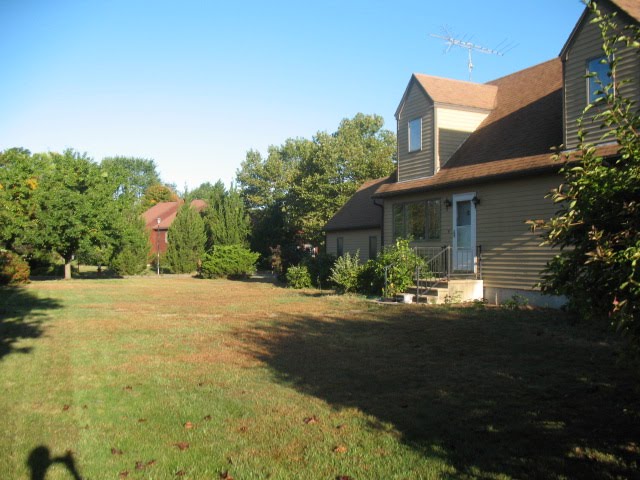
Here we were in September, 2009.
 Edibles and beautiful flowers growing where grass was dominant just last fall.
 Edible forest gardens - mimicking a forest ecosystem (think layers) and being intentional about species selection.
 Salad bowl lettuce growing alongside fava beans. Both are doing excellent.
 Potatoes on the left and favas on the right.
 Lots of garlic...
 ... and chives!

The daisies are blooming.

Observing the garden has been quite a lesson. Many things have worked better than I imagined they would. Many things didn't fare quite as well. I've made mistakes and learned heaps by undertaking this project - it started 9 months ago in September, 2009. Now, I'd like to share with you some pictures. I'll show a few before/afters because it's remarkable how much the ecosystem has shifted here at 3 Willow Lane. Whether or not this a positive transformation is up for you to decide.
 April 2, 2010 - sheet mulching the remainder of our lawn. The goal: to make a pathway from the sidewalk of Willow Lane (Amherst, MA) that is inviting and encourages people to enter. It was intentionally shaped as a tree, with the wide base at the sidewalk and the branches opening up to different beds of the garden.
 Fresh wood chips (about 3") were laid on top of one layer of corrugated cardboard for the pathways. The darker you see is a mixture of decomposted wood chips (raked from other beds of the garden (these chips decomposed during late fall - early spring) and compost, both atop of cardboard to prevent grass from taking over.

White clover was seeded into this mix of wood chips and compost and watered each day. This was about after 1 week of seeding. The white clover fixes nitrogen (which can be tied up due to the wood chips breaking down) and acts as a beautiful ground cover and place-holder until other plants are transplanted.

About 4 weeks later, the green clover carpet has formed quite nicely.
 Here's how the tree path looks now.
Personally, I believe that yard transformations - Grass to Gardens - is great on so many levels. For one, it simply feels great harvesting from your own garden. Most people get a sense of pride, I certainly do, when they see plants that they've cared for are healthy and growing. Why fight nature (mowing your grass - it's a vicious cycle!) when you can be more connected to the micro-ecosystem in which you live.
Here we were in September, 2009.
And here we are now:
 Edibles and beautiful flowers growing where grass was dominant just last fall.
 Edible forest gardens - mimicking a forest ecosystem (think layers) and being intentional about species selection.
 Salad bowl lettuce growing alongside fava beans. Both are doing excellent.
 Potatoes on the left and favas on the right.
 Lots of garlic...
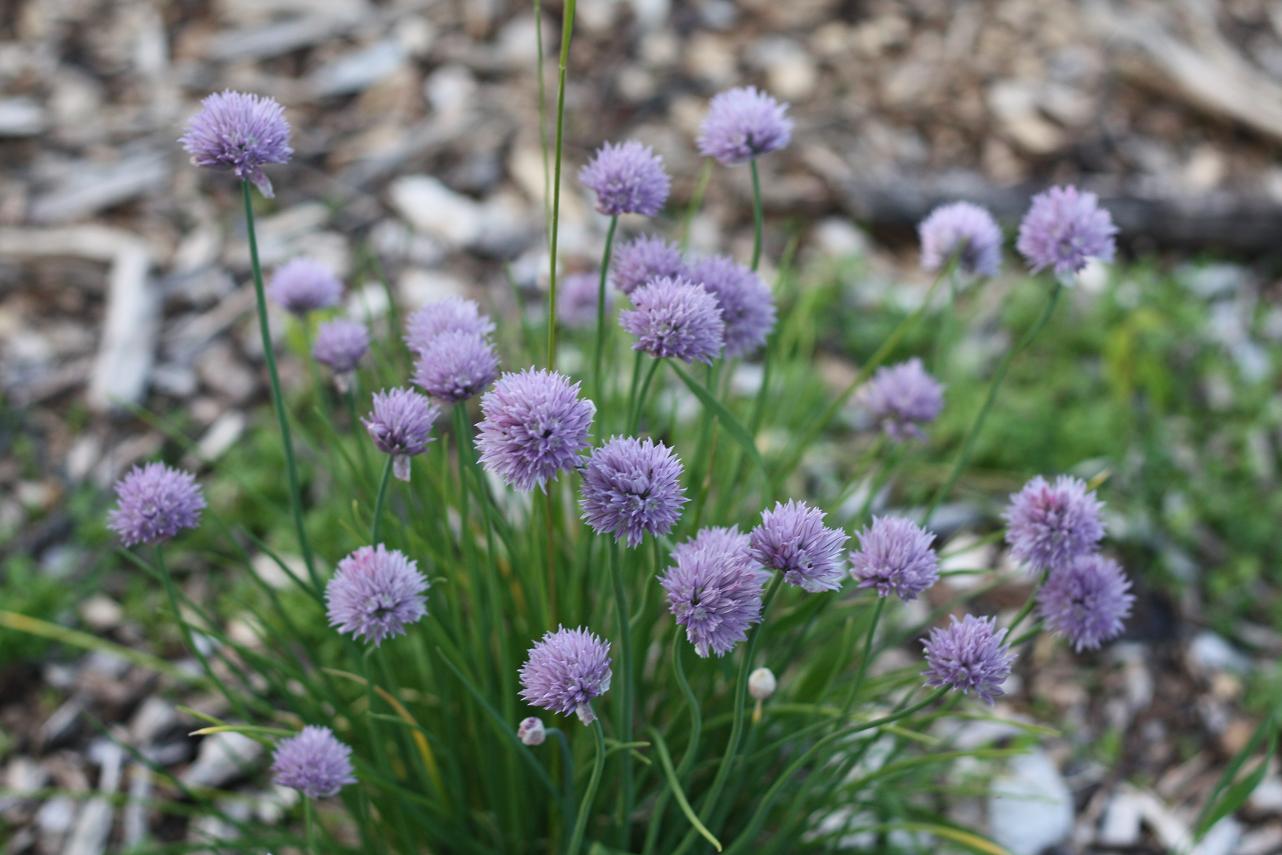 ... and chives!
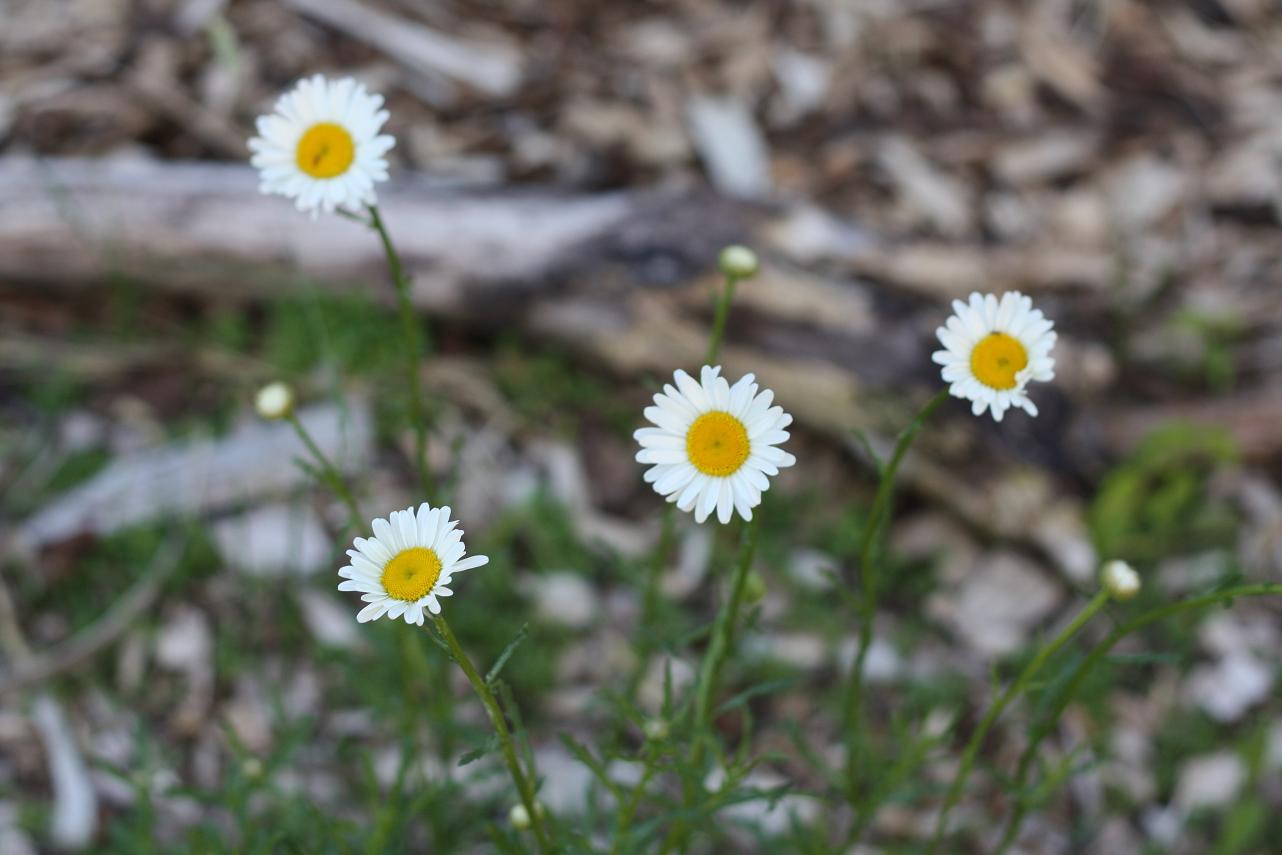
The daisies are blooming.

And sweet williams flower is beginning to show its head. Stay tuned for more updates... and maybe even begin asking yourself "what else can my lawn be used for?"
I'll be working in the yarden all this week. If anyone in the Amherst area wants to come and help, we have a lot of fun projects going on. They are (including, but not limited to) building a rainwater catchment system, some bed prepping and planting, and digging out some beautiful and gigantic flat granite stones that have been grown over by grass since we bought the property 4 years ago! Hope to see some of you soon.
Peace,
Ryan
Wednesday, April 28, 2010
Update on Cape Wind Project!
Today is a great day! I received a message from my friend, James Burns, telling me to check out the latest news about the Cape Wind Project which I was following very closely back in the fall, 2008.
Secretary of Interior Ken Salazar announced today that the Cape Wind Project is approved by the Obama administration. This is BIG news considering the project was proposed TEN years ago...and more than 25 million dollars has been spent trying to get it built. On the other side, 25 million was spent trying to prevent it from being built. Check out the video of it being approved on Youtube: http://www.youtube.com/watch?v=vY87nknT_1Y
I researched and wrote about this project for my natural resource policy and social conflict course - I uploaded it for anyone who is interested in reading about the project's background:
http://umass.academia.edu/documents/0011/1604/Cape_Wind_Conflict.doc
Below is an article taken from Reuters talking about the approval. You'll be able to find lots of other links about this in the coming days. This puts a big smile on my face and is a really big step for clean renewable energy in the U.S.
Cape Wind, first U.S. offshore wind farm, approved
A power-generating windmill turbine operates in a wind farm on Backbone Mountain near Thomas, West Virginia August 28, 2006. REUTERS/Jonathan Ernst
A power-generating windmill turbine operates in a wind farm on Backbone Mountain near Thomas, West Virginia August 28, 2006.
Credit: Reuters/Jonathan Ernst
BOSTON (Reuters) - The first U.S. offshore wind farm, a giant project 5 miles/8 km off the Massachusetts coast, was approved on Wednesday after years of opposition involving everyone from local Indian tribes to the Kennedy family.
U.S. | Green Business | COP15
U.S. Interior Secretary Ken Salazar gave the green light for the historic 130-turbine, 420-megawatt Cape Wind project in Horseshoe Shoal, Nantucket Sound, in what supporters considered a huge step forward for renewable energy in the United States.
"This project fits with the tradition of sustainable development in the area," Salazar said in Boston.
Although small in terms of its production -- the facility would produce enough electricity to power 400,000 houses -- its approval was encouraging to other offshore wind projects already proposed for the East Coast and Great Lakes.
The turbines, more than 400 feet high, will dot an area of about 24 square miles (62 square km), larger than Manhattan, and be visible low on the horizon from parts of Cape Cod. The site is tucked between the mainland of the cape and the islands of Martha's Vineyard, an exclusive celebrity vacation destination, and Nantucket.
German conglomerate Siemens AG will provide the turbines. Construction is expected to begin before the end of the year, said Jim Gordon, president of Cape Wind Associates. Power generation could begin by 2012.
The decision to approve Cape Wind, subject to certain conditions designed to protect offshore waters from damage and reduce visibility, is expected to face legal challenges, but Salazar said he was confident the approval would stand.
Supporters say wind farms represent a giant push for renewable energy efforts and reducing dependence on foreign oil, and fit well with the Obama administration's strategy.
"Greenpeace has been campaigning to get the Cape Wind project built for nearly a decade, and today's victory is worth celebrating. It is long overdue," said Kert Davies, research director at the environmental group.
YEARS OF REVIEW
Cape Wind was subject to years of environmental review and political maneuvering, including adamant opposition from the late Senator Edward M. Kennedy, whose six-acre (2.4 hectare) family compound in Hyannis Port overlooks Nantucket Sound.
A final ruling was near in 2009, but delayed again after two Wampanoag Indian tribes complained that the giant turbines would disturb spiritual sun greetings and possibly ancestral artifacts and burial grounds on the seabed.
Opponents have deemed the project an eyesore, and raised issues ranging from a detrimental effect on property values in the popular vacation area south of Boston, to possible damage to birds, whales, fishing, aviation, and historic sites.
U.S. Senator Scott Brown, the Republican elected this year to fill Kennedy's seat, criticized Wednesday's decision and said the project was a threat to regional tourism and fishing.
The Advisory Council on Historic Preservation, a federal agency in charge of safeguarding historic landmarks, recommended this month that the project be rejected.
The governors of six eastern U.S. states shot back in a letter to Salazar, arguing that other offshore projects will likely be abandoned if the Cape Wind project was rejected.
Salazar cited that letter as part of his decision. "We believe there is huge potential for offshore wind along the Atlantic. We don't want to be second to anyone," he said.
U.S. wind generation increased by 27 percent last year, accounting for 2 percent of total electricity supplies, according to the Energy Department. Wind power supports about 85,000 American jobs.
"Renewable energy projects like these not only help fight climate change, they can create jobs and play a central role in our economic recovery," said Frances Beinecke, president of the Natural Resources Defense Council.
Several countries have achieved much higher levels of wind power generation, often with large government subsidies, including Denmark, Spain and Portugal.
Less than 2 percent of wind energy is offshore, but turbine makers see it as an area of huge growth potential.
Siemens rival General Electric Co expects to increase its offshore business to generate $3 billion to $5 billion a year over the next few years, chief executive Jeff Immelt said at the company's annual meeting in Houston on Wednesday.
Tom King, president of the power company National Grid US, said talks with Cape Wind about purchasing its output are continuing.
http://www.reuters.com/article/idUSTRE63R42X20100428?feedType=RSS&feedName=topNews
Local PDC Course May 10-21 (All-Star Lineup!)
G'evening y'all,
I just received notice that there will be a permaculture design certificate (PDC) course taught at Hampshire College from May 10-21. It is being taught by local permaculture instructors Mai Frank and Ned Phillips-Jones (with guest instructors including Dave Jacke, Jono Neiger, and Eric Toensmeier). That's an All-Star lineup for those of you who aren't familiar with the names.
This is an awesome opportunity to gain your PDC and it probably the least expensive PDC course I have ever seen. I highly recommend making an inquiry if you are at all interested in permaculture. The last I heard about half the spots were filled.
Check out the flyer and e-mail HCPermacultureDesignCourse@gmail.com for more info. Also, please pass this e-mail along to anyone you think might be interested.
Hope everyone is doing well and your end of the semesters aren't too overwhelming. Good luck - the semester's almost over!
Peace,
Ryan
Subscribe to:
Posts (Atom)

